
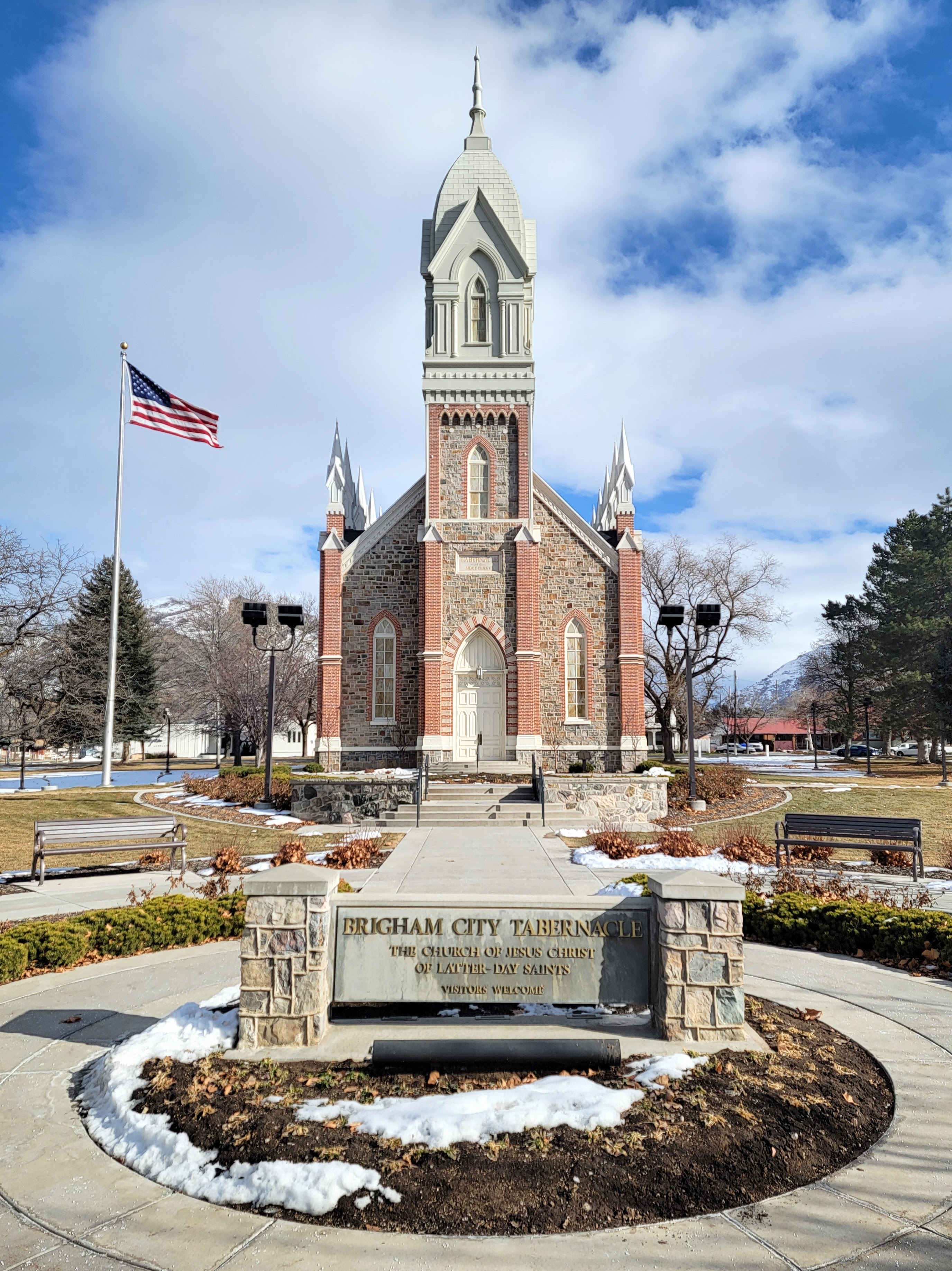
- Architect: Truman O. Angell
- Groundbreaking 1865
- Dedicated 1897
- Style: Gothic Revival
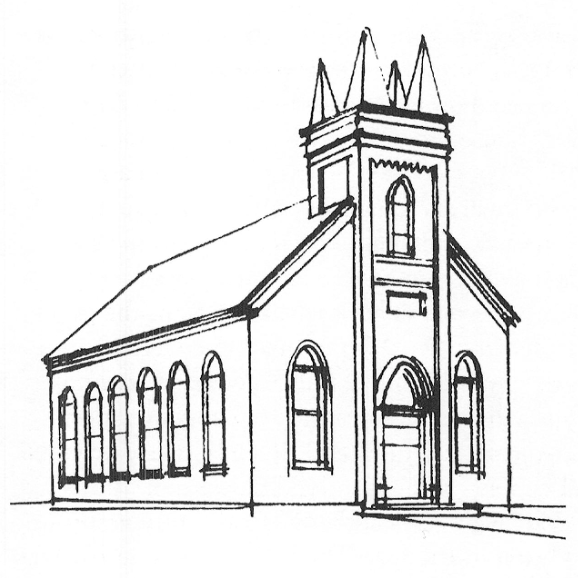
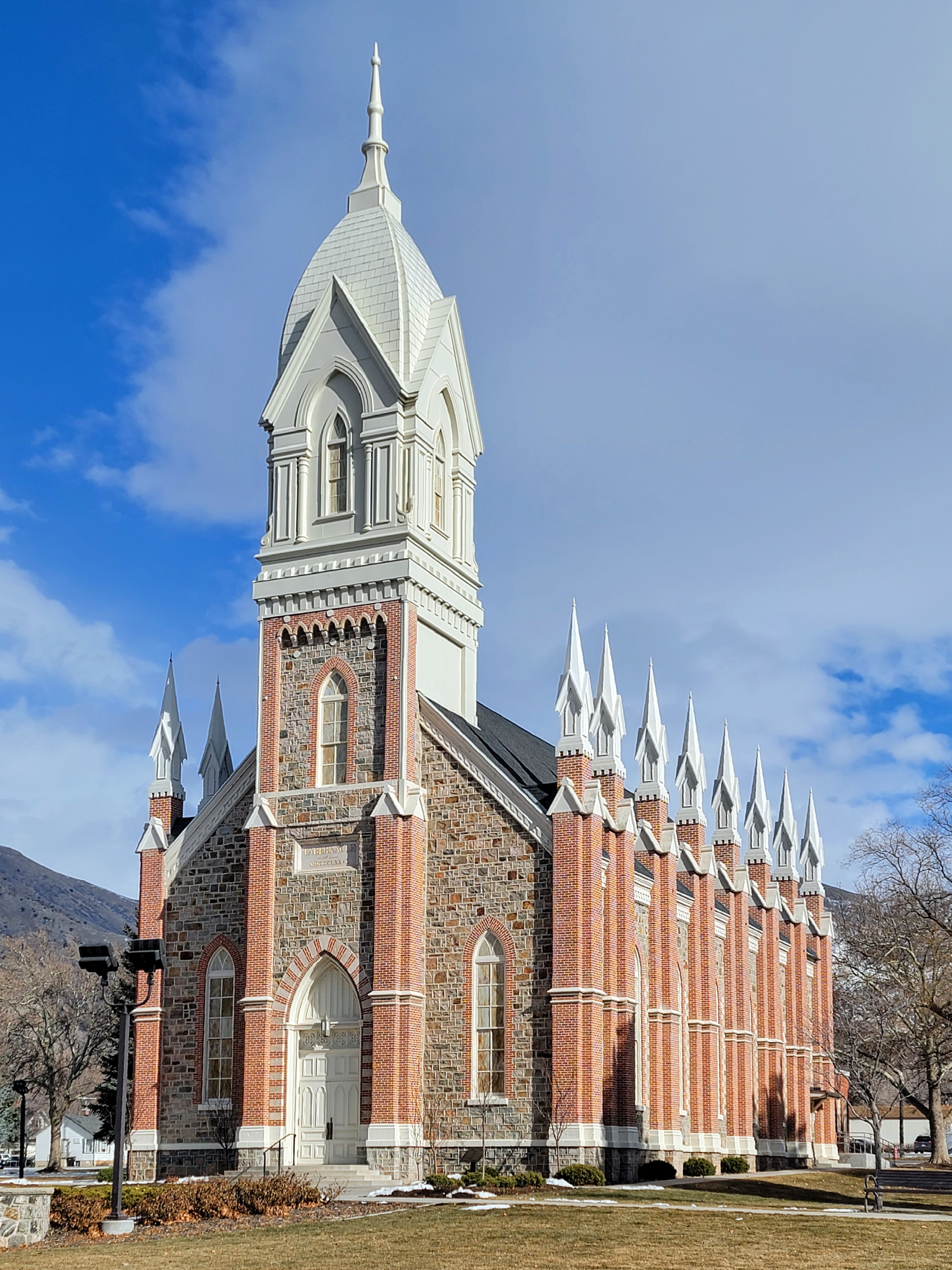
The Brigham City Tabernacle (sometimes called the Box Elder Tabernacle) took 32 years complete. At first it was delayed so that workers could focus on completing the transcontinental railroad. A simplified version of the tabernacle was finally completed in 1879. It had no balcony and had a tower similar to the Bountiful Tabernacle.
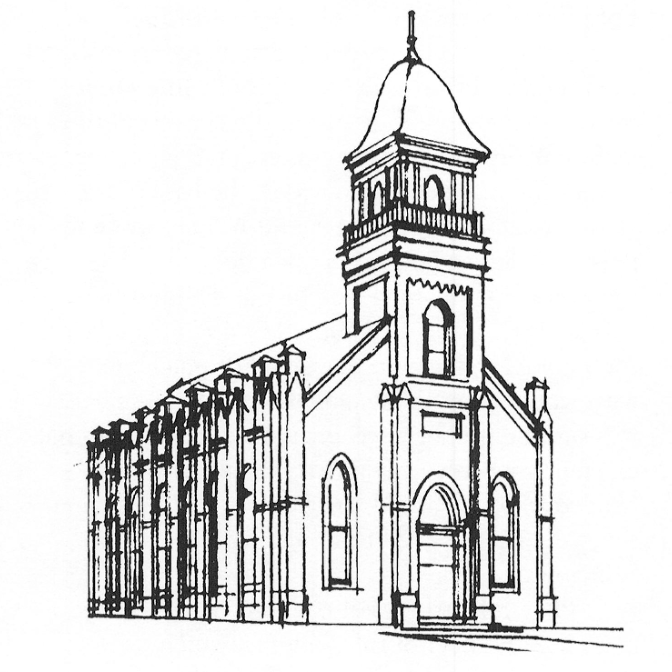
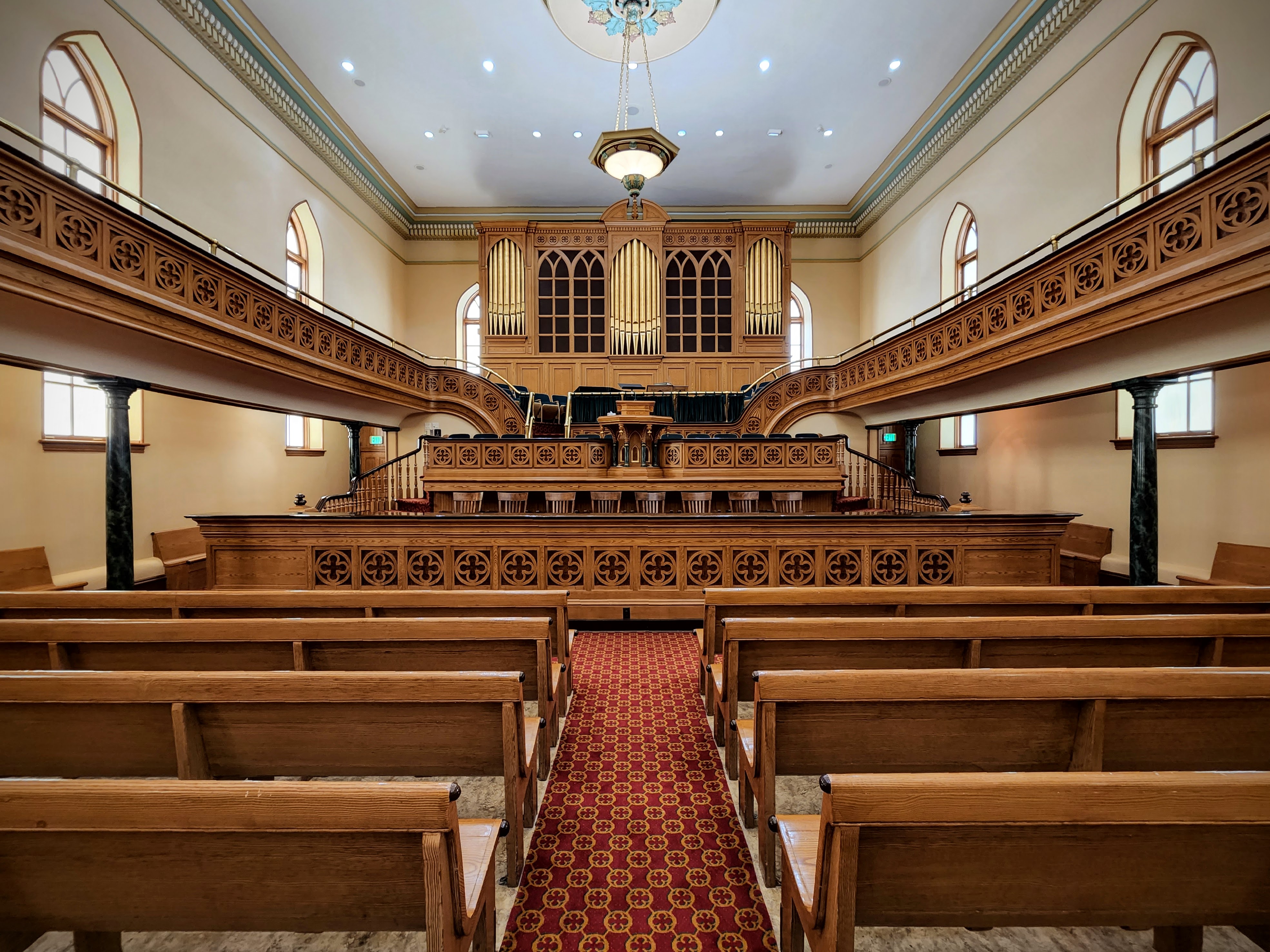
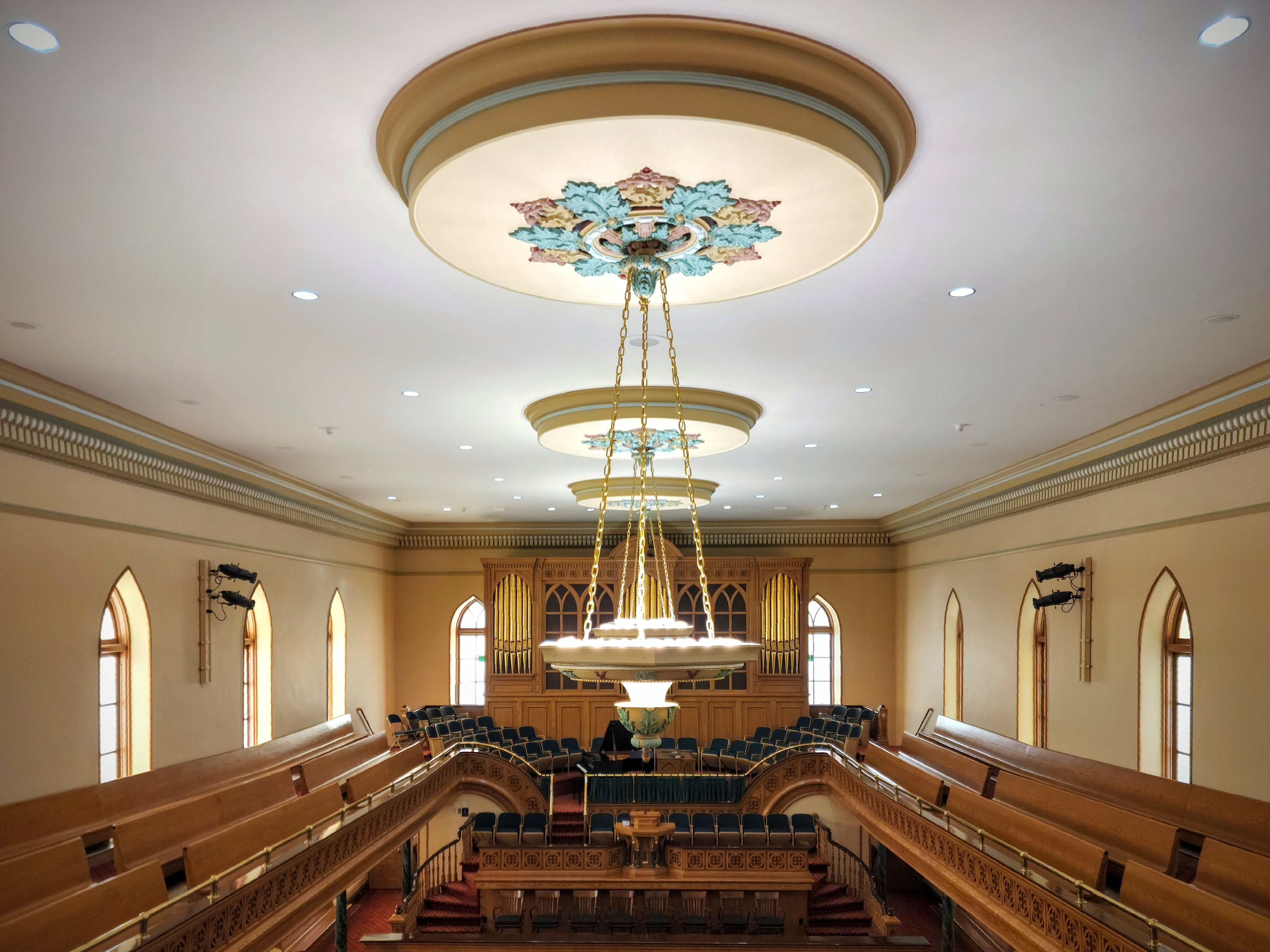
The tabernacle’s 2nd permutation came in 1889, when a new mansard tower was added along with a series of brick buttresses on each side. This structure burned down in 1896, leaving only the outer shell standing. A third version of the tabernacle was built in 1897 with a much grander tower. Pinnacles were attached to the buttresses and a U-shaped gallery was added to the new interior.
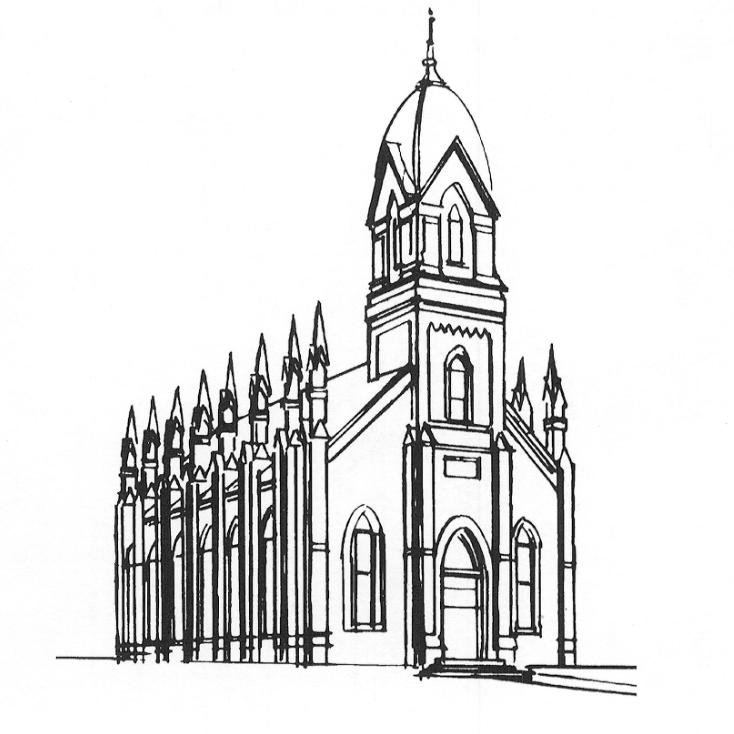
The exterior of the Brigham City Tabernacle betrays a lack of coherence which is most likely due to the haphazard history of its construction and the oversized ambitions of local leadership. The tower is too large, making the tabernacle look “top-heavy.” The sides of the building are crowded with so many pinnacles that it looks “prickly,” like a flank of marching soldiers carrying spears.
The Salt Lake City Assembly Hall (1882) makes an interesting comparison. It also has a large victorian tower and multiple gothic pinnacles. However, the Assembly Hall incorporates these details in a balanced way because it was designed from the beginning with a grand scheme in mind. The Brigham City Tabernacle is hemmed in by the humble silhouette of its original structure.
In spite of these faults, the overall appearance of the Brigham City Tabernacle is mitigated by the remarkable quality of the polychromatic brickwork and impressive gothic detailing.
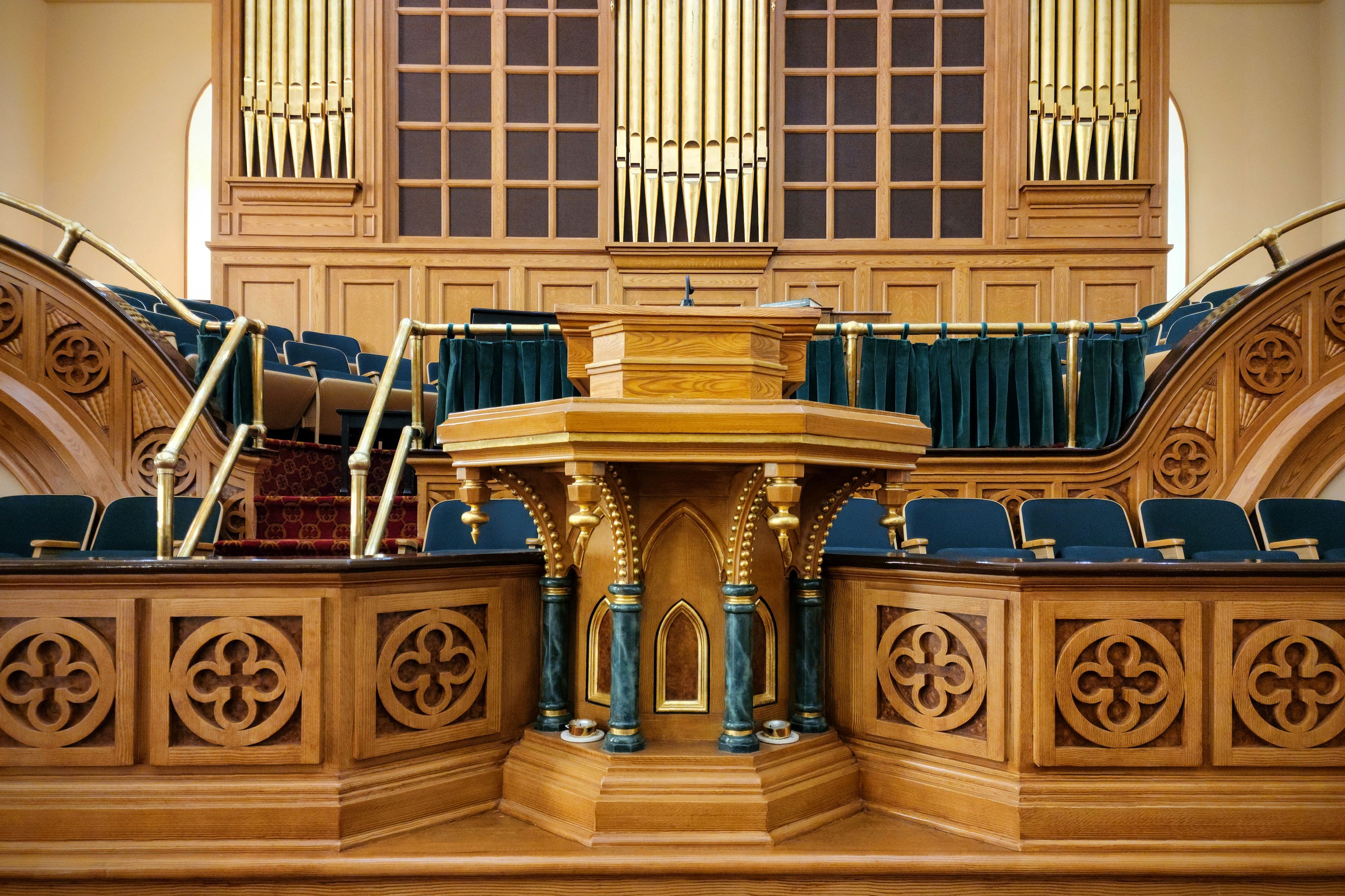
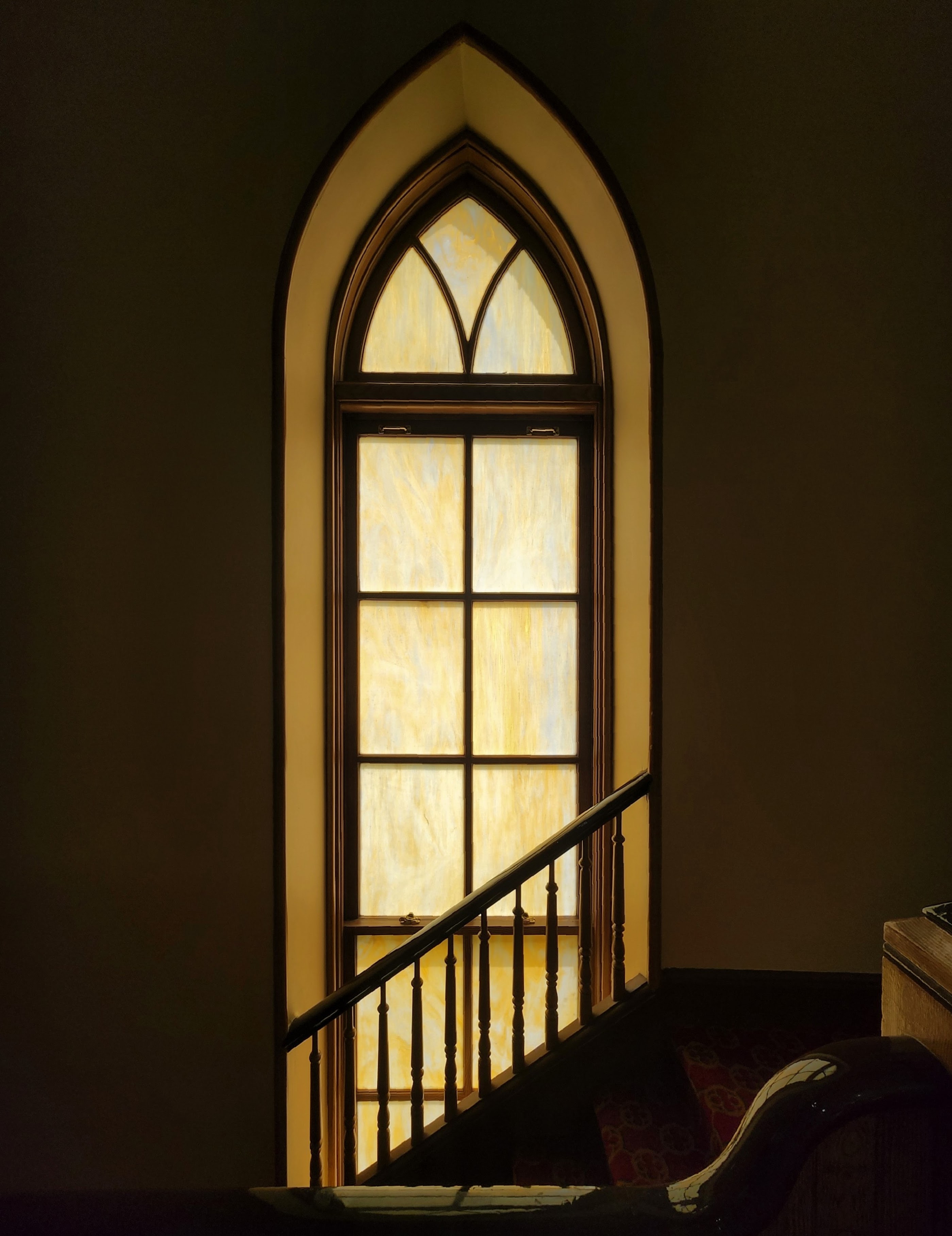
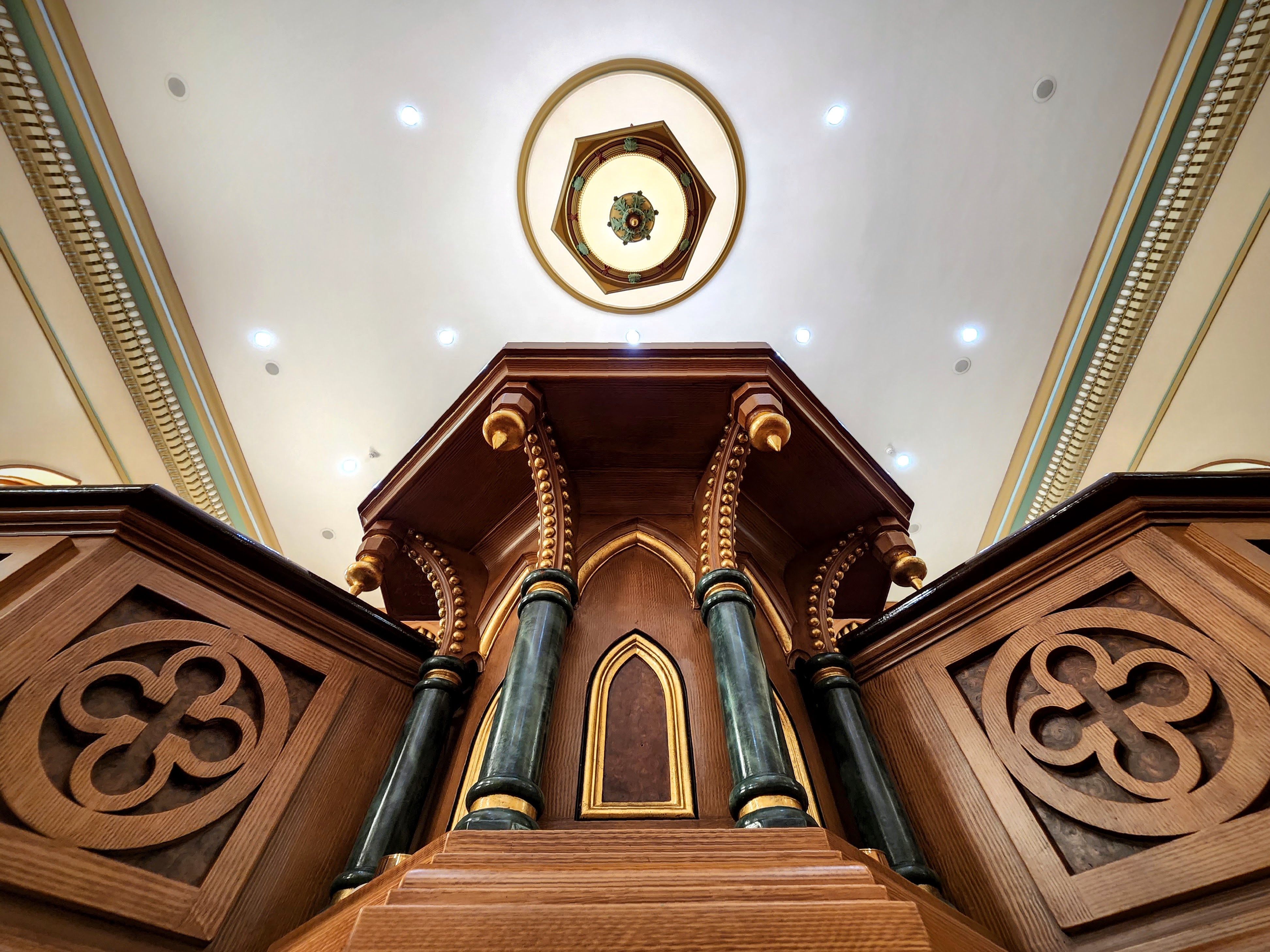
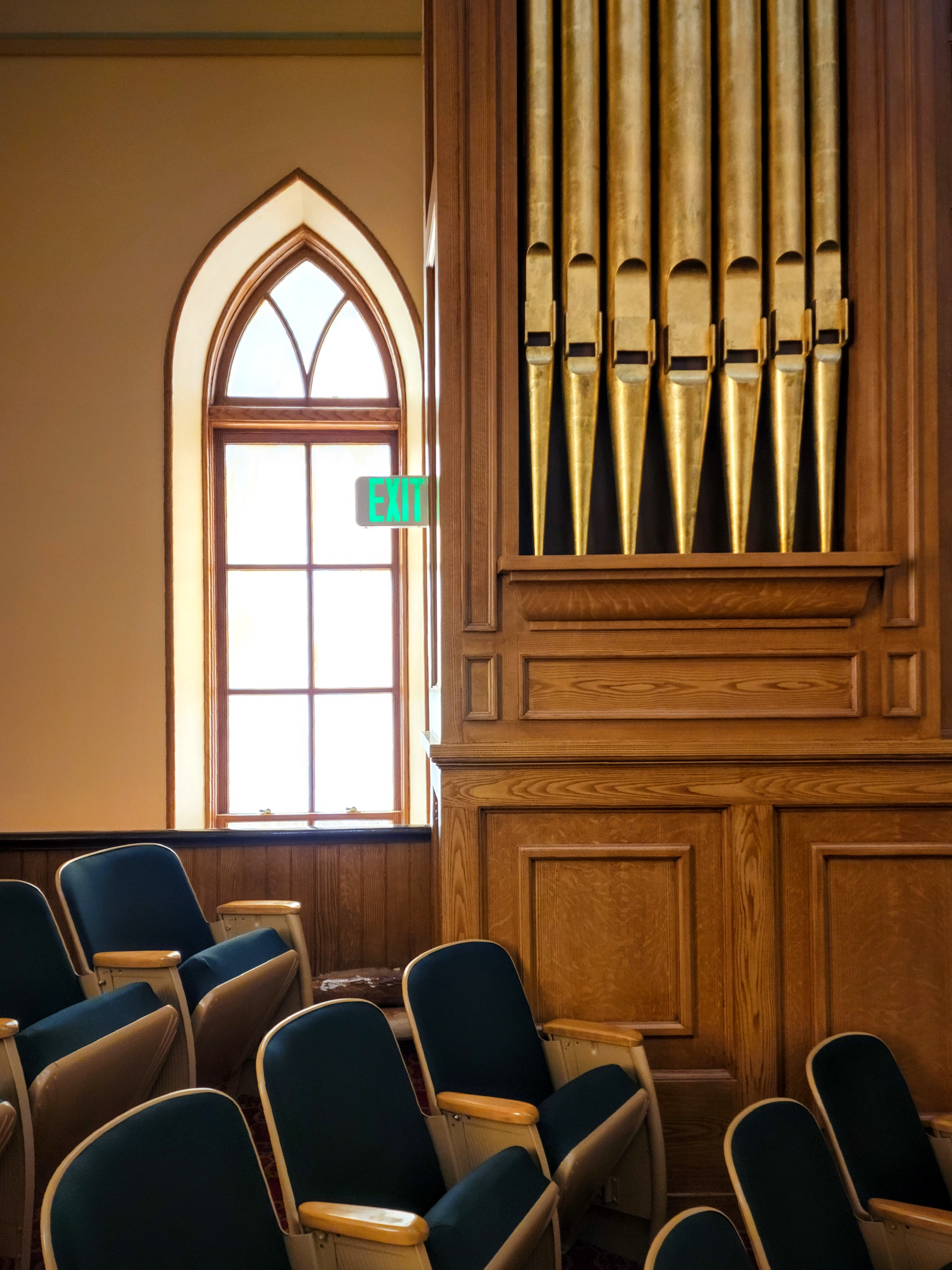
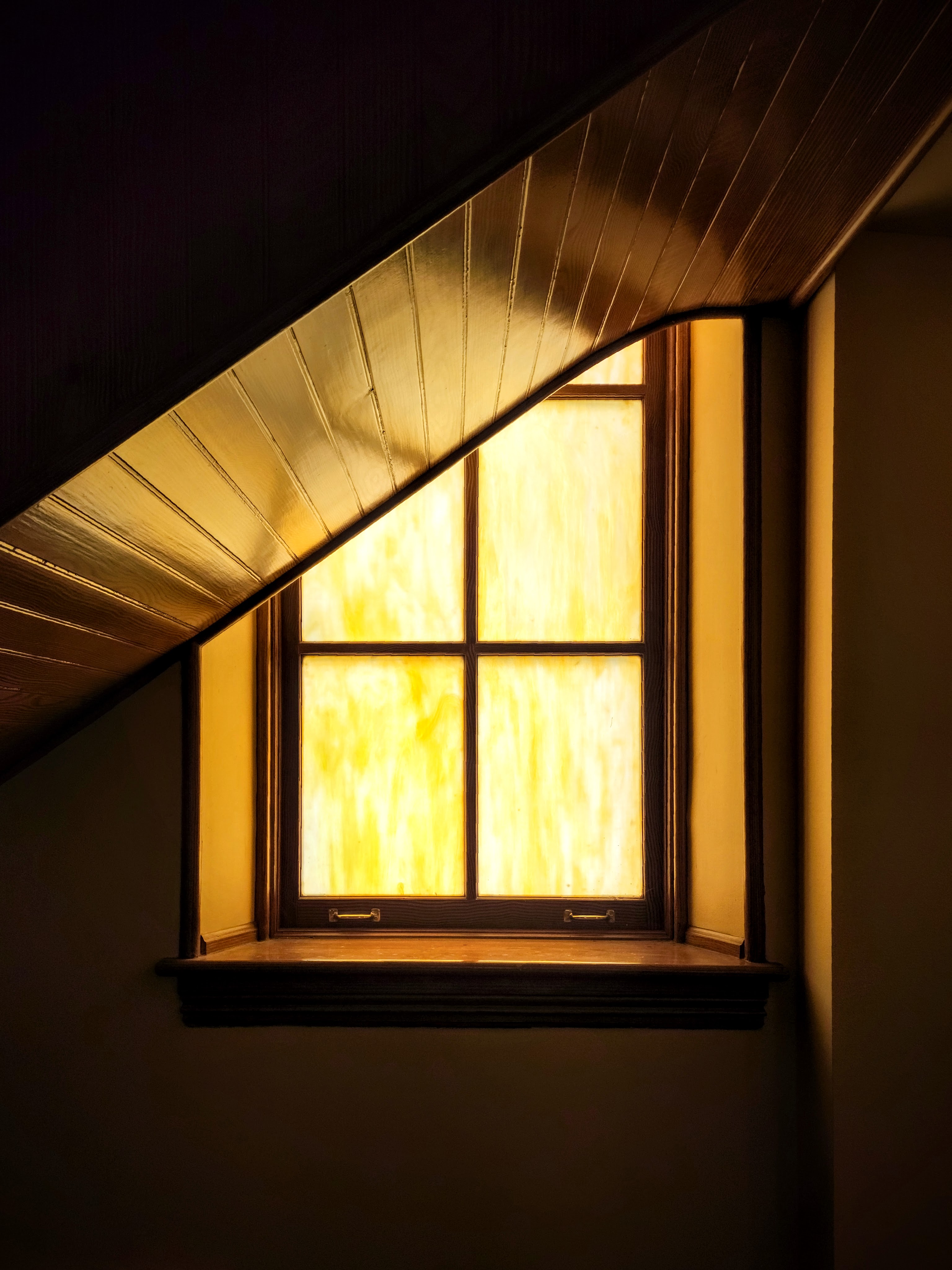
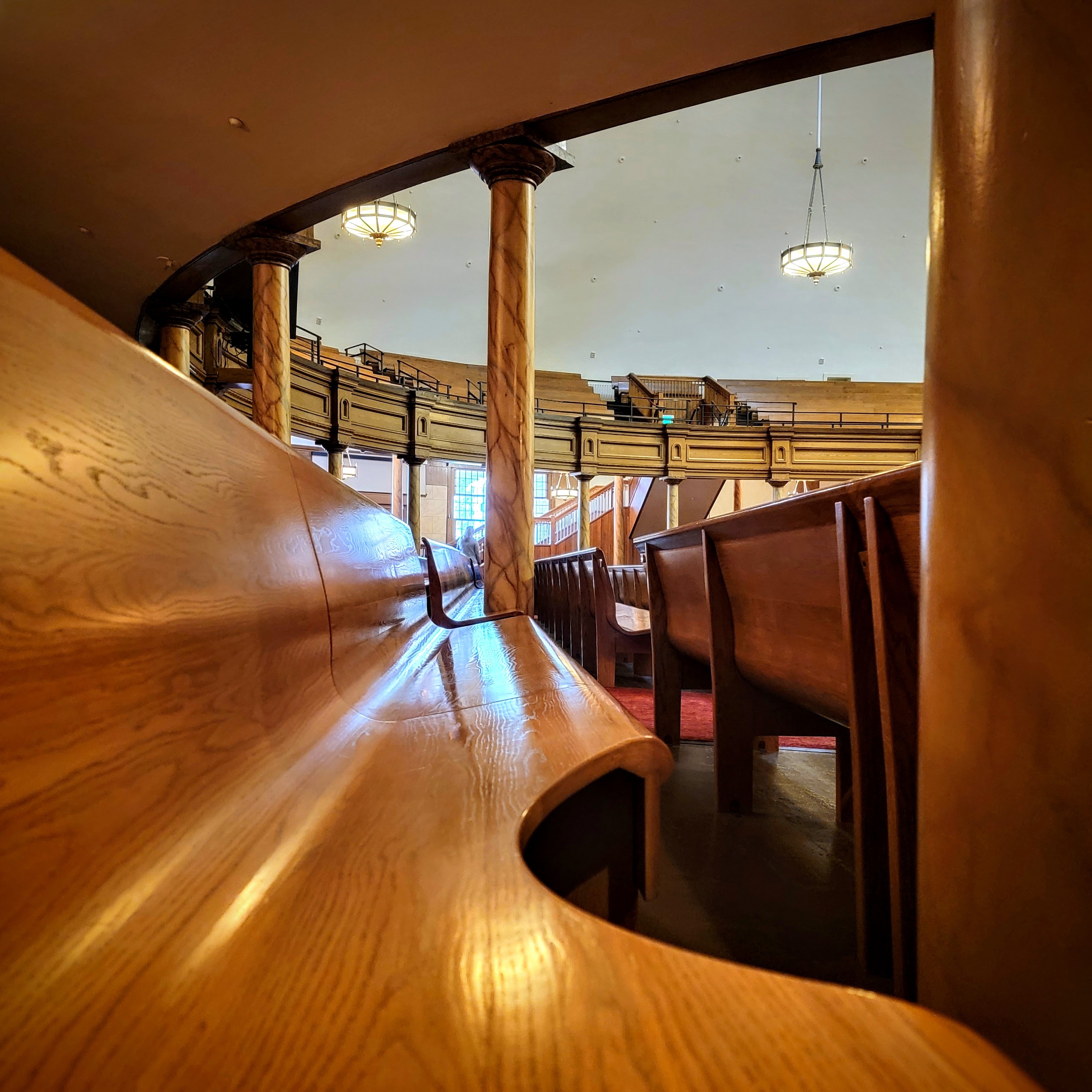
The tabernacle also has one of the finest interiors built in the LDS church. The woodwork contains delicately carved gothic and classical details painted to look like oak or marble. The plaster work is exceptional and is painted to highlight its egg and dart motifs.



 LDS Meetinghouse Architecture